The best wood for a sauna stays comfortable to touch when hot, releases no resin, copes with moisture and looks good for years. For walls and ceilings, linden is the go-to choice; for benches, abachi is hard to beat; cedar is chosen for its aroma; and thermo linden gives a darker, more moisture-resistant finish. On the outside of an outdoor sauna, water-resistant larch does the heavy lifting. Here’s how they compare.
Why the choice of wood matters
A sauna is not an ordinary room. Temperatures are high, humidity rises and falls, and your skin is in direct contact with the timber. The wrong wood can:
- feel uncomfortably hot against the skin;
- bleed resin onto the surface;
- warp, darken or rot from moisture;
- need frequent repairs or replacement.
So sauna timber is judged on four things: heat conductivity (the lower, the more comfortable to sit on), resin content, resistance to moisture and fungus, and appearance and scent.
Interior sauna woods
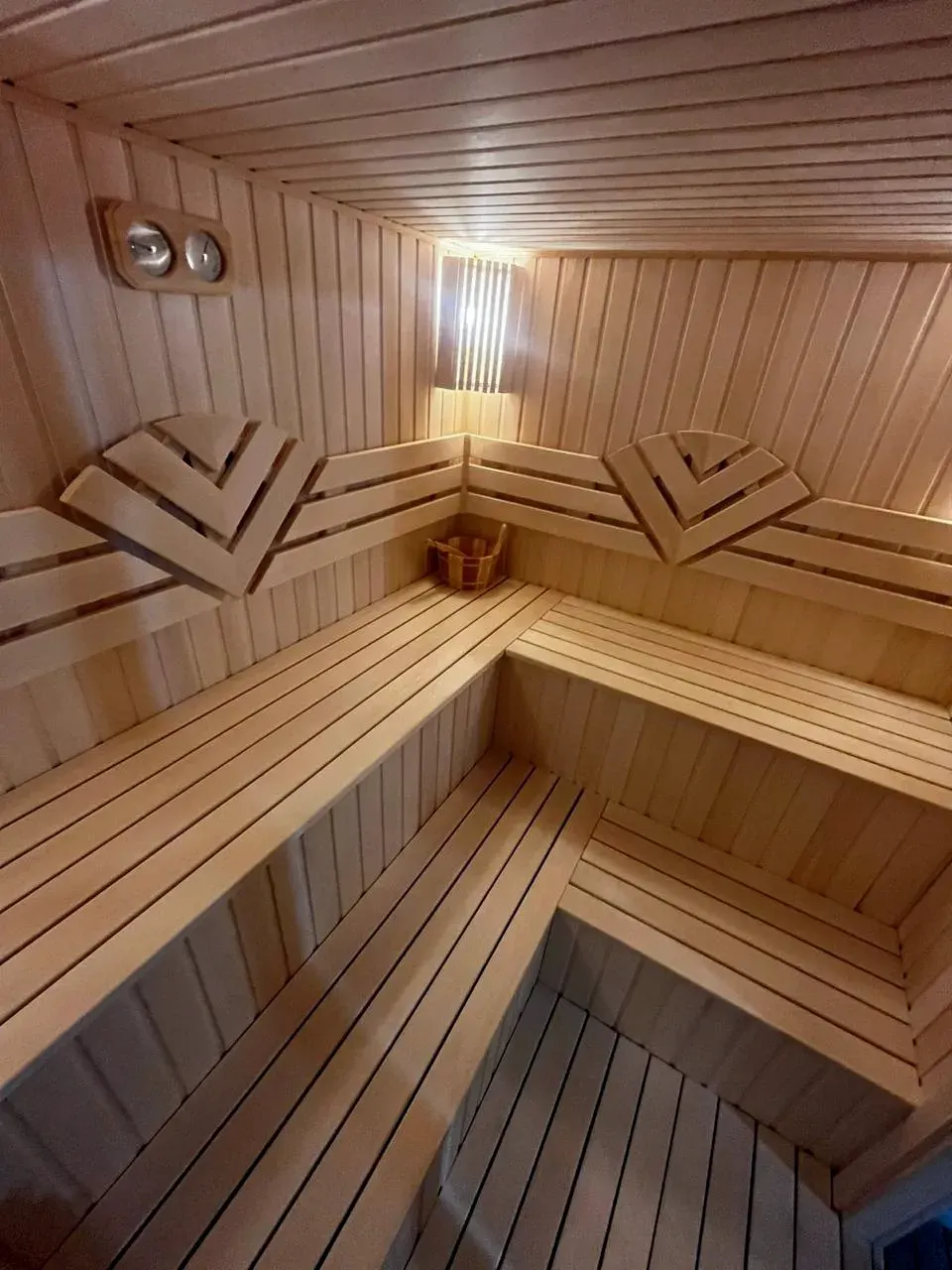
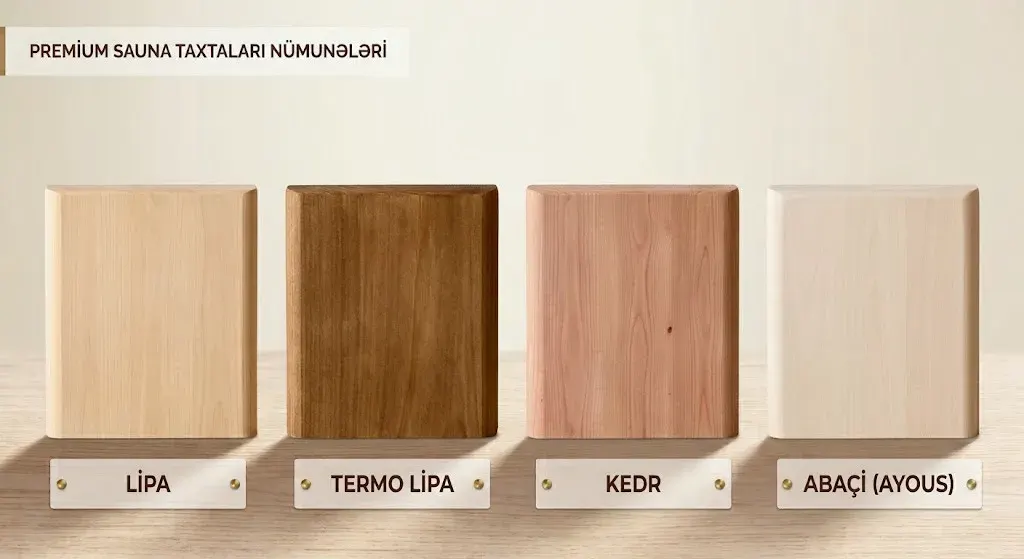
Linden (lipa)
The classic, all-round choice.
- Resin-free — nothing seeps out at high temperatures.
- Smooth, light and pale in colour.
- Doesn’t burn the skin.
- Works for walls, ceiling and benches alike.
Linden is the standard interior wood in Barrel Sauna builds.
Thermo linden
Thermo linden is linden that has been through a special high-temperature treatment. The result:
- better resistance to moisture, rot and warping;
- a rich, dark caramel colour that looks warm and premium;
- a light, pleasant scent.
A strong pick for contemporary designs and darker interiors.
Abachi (ayous)
An African hardwood widely regarded as the world’s number-one material for sauna benches, because:
- it has very low heat conductivity, so benches stay comfortable even in strong heat;
- it is knot-free with an even grain;
- it doesn’t splinter.
Abachi is often used for benches, backrests and headrests, with another wood on the walls.
Cedar
Cedar is all about aroma. Its natural essential oils give the sauna a gentle aromatherapy effect and are known for antibacterial properties. Cedar also:
- resists moisture, mould and fungus;
- has a rich, warm tone.
Ideal if you want a fragrant, close-to-nature atmosphere.
The “wild sauna”
A “wild sauna” is built from whole linden logs and stumps. Instead of smooth panelling you get raw, natural texture — the room feels like a cabin in the woods. It’s a striking option for homeowners who want something different, and for hotels and spas.
Heat conductivity: why wood feels fine and metal burns
On a sauna bench you can sit comfortably on wood, yet touching a metal nail or handle at the same temperature can hurt. The reason is heat conductivity: metal transfers heat to your skin very quickly, wood does so slowly. The lighter and more porous the timber, the less heat it passes on — which is exactly why light, porous abachi is so prized for benches.
Two practical rules follow:
- bench fixings should be hidden, with no exposed metal on the surface;
- handles, backrests and headrests should be made from low-conductivity woods.
Comparison table
| Wood | Key advantage | Colour | Best used for |
|---|---|---|---|
| Linden | Resin-free, smooth, skin-friendly | Pale | Walls, ceiling, benches |
| Thermo linden | Resists moisture and warping | Dark caramel | Walls, ceiling, modern interiors |
| Abachi | Very low heat conductivity, knot-free | Pale, even | Benches, backrests |
| Cedar | Essential oils, aroma, mould-resistant | Warm, rich | Walls, feature areas |
| Wild sauna | Natural log texture, forest feel | Natural linden | Design saunas, spas |
Wood for outdoor saunas: outside vs inside
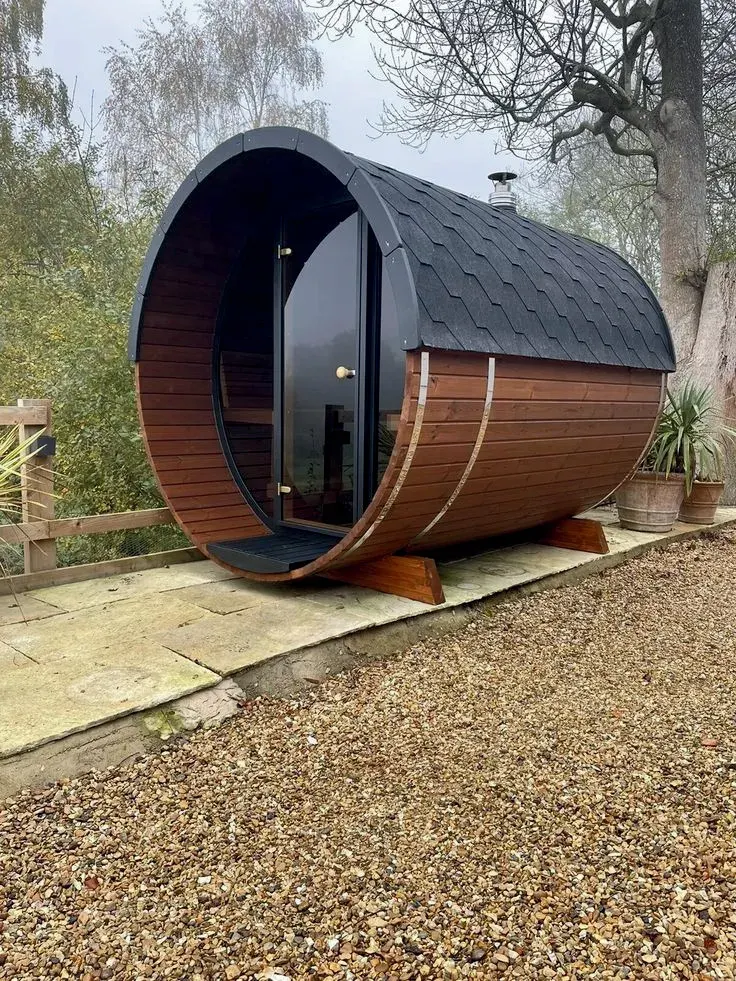
An outdoor sauna has two separate jobs. Inside, the criteria above apply. Outside, the timber has to withstand rain, sun and frost.
Exterior — larch. We clad our outdoor saunas in water-resistant, thermo-treated larch (listvenica), a red pine often called “ship timber” for how well it handles moisture.
Interior — linden by default, with cedar, abachi, African abachi or teak available. See all models on our outdoor saunas page.
A wall build-up that protects the wood
Even the best timber won’t last without the right wall behind it. Behind the panelling in our saunas you’ll find:
- mineral stone wool to hold the heat;
- a moisture-blocking membrane that keeps steam away from the frame.
In saunas built inside a house, these layers also protect the home’s own walls from steam and humidity. More on our indoor saunas page.
Quick recommendations
- Classic, comfortable sauna — linden.
- Dark premium look plus extra moisture resistance — thermo linden.
- Most comfortable benches — abachi, combined with another wood.
- Aroma — cedar.
- Something truly different — a wild sauna.
- Outdoor sauna exterior — larch.
Mixing woods works well: thermo linden walls with abachi benches, for example, look great and feel great.
Looking after sauna wood
- Dry the room with the door open after every session.
- Sit on towels.
- Don’t varnish or paint interior wood — it needs to breathe.
- Wipe benches with a clean damp cloth from time to time.
FAQ
What is the best wood for a sauna?
There’s no single winner. Linden or thermo linden for walls and ceiling, abachi for benches and cedar for aroma are the most popular combinations.
Why avoid resinous wood inside a sauna?
At high temperatures resin can bleed out and become sticky and hot on the skin. That’s why resin-free woods such as linden and abachi are preferred indoors.
How is thermo linden different from regular linden?
It is heat-treated, which makes it more resistant to moisture, rot and warping, and gives it a dark caramel colour and a light scent.
Which wood is used on the outside of an outdoor sauna?
A water-resistant species. We use thermo-treated larch.
What is a “wild sauna”?
A sauna built from whole linden logs and stumps, with a raw natural texture that feels like a forest cabin.
Let’s choose your wood together
The wood you choose shapes both how your sauna looks and how it feels. See examples on our projects page or message us on WhatsApp for a free consultation and project.