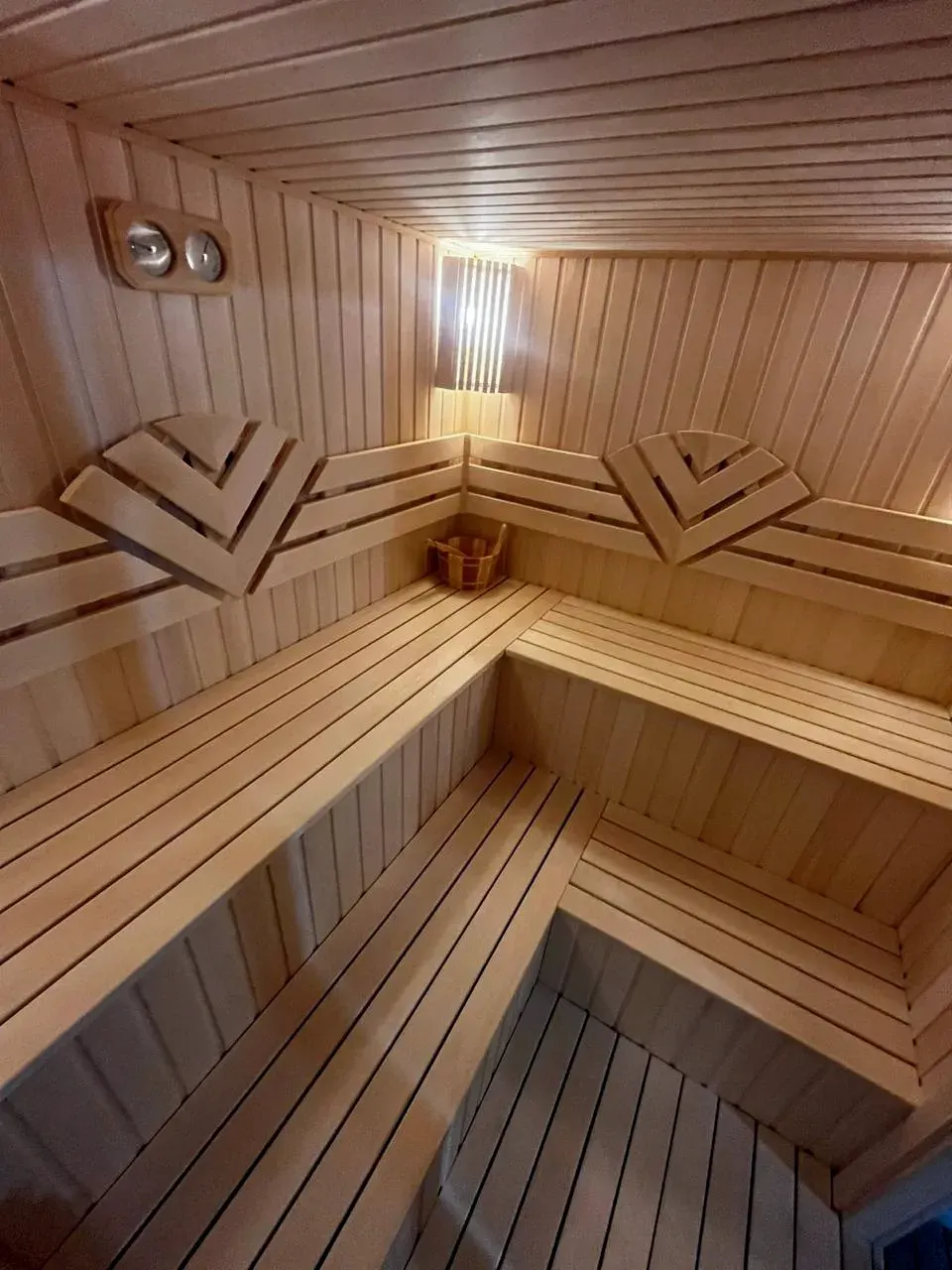
Yes, you can build a sauna inside your home — and when it’s planned properly, it’s perfectly safe. A home sauna installation comes down to a handful of steps: pick the right room, plan ventilation, build an insulation and membrane layer that protects your walls from steam, run a dedicated power line for the heater, then choose the wood, lighting and decor. Here’s each step in plain English.
Is an indoor sauna right for you?
An indoor sauna is built from scratch inside an existing room — in a house, villa, apartment, hotel or spa — and fitted exactly to that space. It’s the best fit when:
- you have no garden space, or simply prefer not to have an outdoor sauna;
- you want to use it year-round without stepping outside;
- you have a basement, a spare room near the bathroom or unused space;
- you’re adding a sauna for hotel or spa guests.
1. Choosing the room
A good indoor sauna starts with a good location. Consider:
- Shower access. You’ll want to rinse off between rounds, so next to or within the bathroom suite is ideal.
- Size. A small room is plenty for 2–3 people. An oversized sauna takes longer to heat and uses more energy.
- Ceiling height. Tall ceilings work against you — hot air rises away from the people sitting on the benches. If needed, the ceiling is dropped inside the sauna.
- Floor. It must be water-resistant; tiles or porcelain are the usual choice.
- Basement. Often a great option, but humidity and airflow need extra care.
| Room type | Advantage | Watch out for |
|---|---|---|
| Next to the bathroom | Shower close by, plumbing in place | Limited floor area |
| Basement | Separate, quiet zone | Humidity and airflow |
| Spare room / study | More space | Where the shower will go |
| Apartment | Sauna without leaving home | Electrical capacity and building rules |
2. Ventilation
Sauna ventilation does two things: keeps the air fresh during a session and helps the room dry out afterwards. The general principle:
- fresh air comes in low, usually near the heater;
- warm, humid air leaves high on the opposite side;
- after a session, the door is left open so the sauna dries completely.
The exact layout depends on the room’s volume and the type of heater, so it should be designed by a specialist.
3. Insulation and membrane: protecting your walls
This is the most important part of any indoor sauna. If steam and moisture reach the house walls, plaster, paint and even the structure itself can suffer over time. So a multilayer build-up goes between the existing walls and the sauna frame:
- Mineral stone wool — keeps heat inside so the sauna warms up faster.
- A moisture-resistant membrane — stops steam from reaching the house walls.
- Timber lining — the finished interior you see.
The result: your home’s walls stay protected, and the sauna heats faster using less energy.
4. Electrics: a dedicated circuit for the heater
Indoor saunas almost always use an electric heater, which means:
- a dedicated cable from the consumer unit with its own breaker;
- cable size and breaker rating matched to the heater’s output;
- larger heaters sometimes needing a three-phase supply;
- all work carried out by a qualified electrician.
In an apartment, check your available electrical capacity early. We supply and install Harvia, SAWO, Teplodar, TMF and Fanlan heaters — see the options on our sauna stoves page.
5. Choosing the wood
The main interior options:
- Linden — resin-free, smooth, comfortable on the skin.
- Thermo linden — resists moisture and warping; dark caramel colour and a light scent.
- Abachi — very low heat conductivity, ideal for benches.
- Cedar — natural essential oils, lovely aroma, resists mould and fungus.
- Wild sauna — built from whole linden logs for a forest-cabin feel.
We go into more detail in our separate guide to the best wood for a sauna.
6. Lighting and decor
An indoor sauna is part of your interior design. Popular touches include:
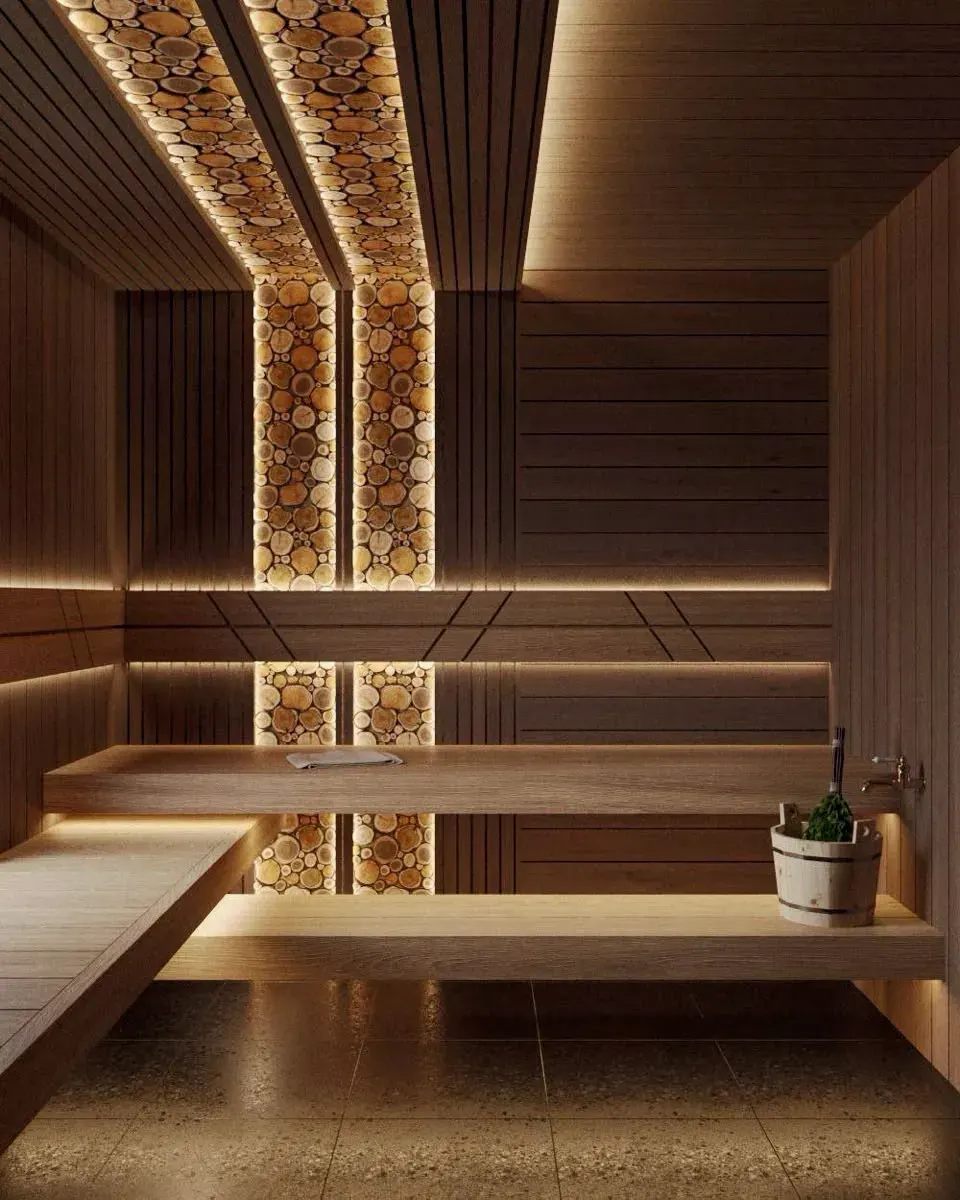
- LED lighting — concealed strips under the benches or behind backrests create a soft glow. Only use fittings rated for sauna temperatures.
- Himalayan salt panels — backlit, they give off a warm amber light.
- Decorative stone — a feature wall that adds texture.
- Log-cut decor — panels of sliced timber rounds for a natural look.
Buckets, ladles, thermometers and other finishing touches are in our accessories section.
7. Door and safety
- Sauna doors are tempered glass or timber and should open outwards.
- There should be no lock on the door.
- A guard rail around the heater is recommended.
- A thermometer and hygrometer help you keep an eye on conditions.
How an indoor sauna is built: the stages
- Site visit and measurements.
- Design: bench layout, heater, ventilation, lighting.
- Electrical and ventilation preparation.
- Frame, insulation and membrane.
- Timber lining, benches and door.
- Heater, lighting and decor installed, then a first test heat.
FAQ
Can I install a sauna in an apartment?
Yes, provided there’s a suitable room, enough electrical capacity and proper ventilation. It’s worth checking your building’s rules first.
Will a sauna damage the walls of my house?
Not if it’s built correctly. Mineral stone wool and a moisture-resistant membrane keep steam from reaching the walls.
What kind of heater does a home sauna need?
Usually an electric heater, sized to the sauna’s volume and connected to its own dedicated circuit.
Which wood is best for an indoor sauna?
Linden or thermo linden for walls and ceiling, abachi for benches and cedar for aroma are the most popular choices.
Do you build saunas for hotels and spas?
Yes. We build saunas fitted to existing rooms in homes, villas, hotels and spa centres across Azerbaijan.
Let’s plan your home sauna
Send us the room dimensions and a few photos, and we’ll suggest the layout, wood and heater. See examples on our indoor saunas page, or message us on WhatsApp for a free consultation and project.