Sauna ventilation brings in fresh air, removes moisture and stale air, spreads heat evenly through the room and dries the timber after each session. The basic rule is simple: fresh air enters low, near the heater, and hot, humid air leaves on the opposite side. In a wood-fired sauna, ventilation is also a safety issue, directly linked to carbon monoxide and fire risk. Here’s how to plan it properly.
Why ventilation matters
A poorly ventilated sauna shows problems quickly:
- Stuffy air. With several people inside, oxygen drops and headaches or fatigue can follow.
- Uneven heat. Scorching at the ceiling, cool at foot level.
- Lingering moisture. Timber that can’t dry darkens, smells and can grow mould.
- Shorter lifespan. Benches and walls that stay damp age fast.
- Higher risk with wood heaters. Without enough combustion air, carbon monoxide (CO) can form.
Good ventilation makes a sauna more comfortable, healthier and longer-lasting. A common rule of thumb is about six air changes per hour, but the exact design depends on room volume and heater type.
The basic principle: where air comes in and goes out
Sauna ventilation has two main elements:
- Inlet — fresh, cool air enters, usually low down and close to the heater so it warms up immediately instead of hitting bathers as a cold draught.
- Outlet — stale, humid air leaves, usually on the opposite side so the airflow crosses the whole room.
Many saunas also have a drying vent near the ceiling: closed during the session, opened afterwards so the room dries quickly.
Electric vs wood-fired heaters
| Factor | Electric heater | Wood-fired heater |
|---|---|---|
| Inlet | Near the heater — low or above it, per the manufacturer’s manual | Near the floor, in front of or under the heater |
| Outlet | Opposite wall — under the bench or near the ceiling | Opposite side, high up |
| Heater’s role | Only heats the air | Draws combustion air and sends it up the chimney |
| Extra requirements | Dedicated electrical circuit | Chimney, spark arrester, fire clearances |
| Main risk | Faulty electrical installation | Carbon monoxide and fire |
Saunas with an electric heater
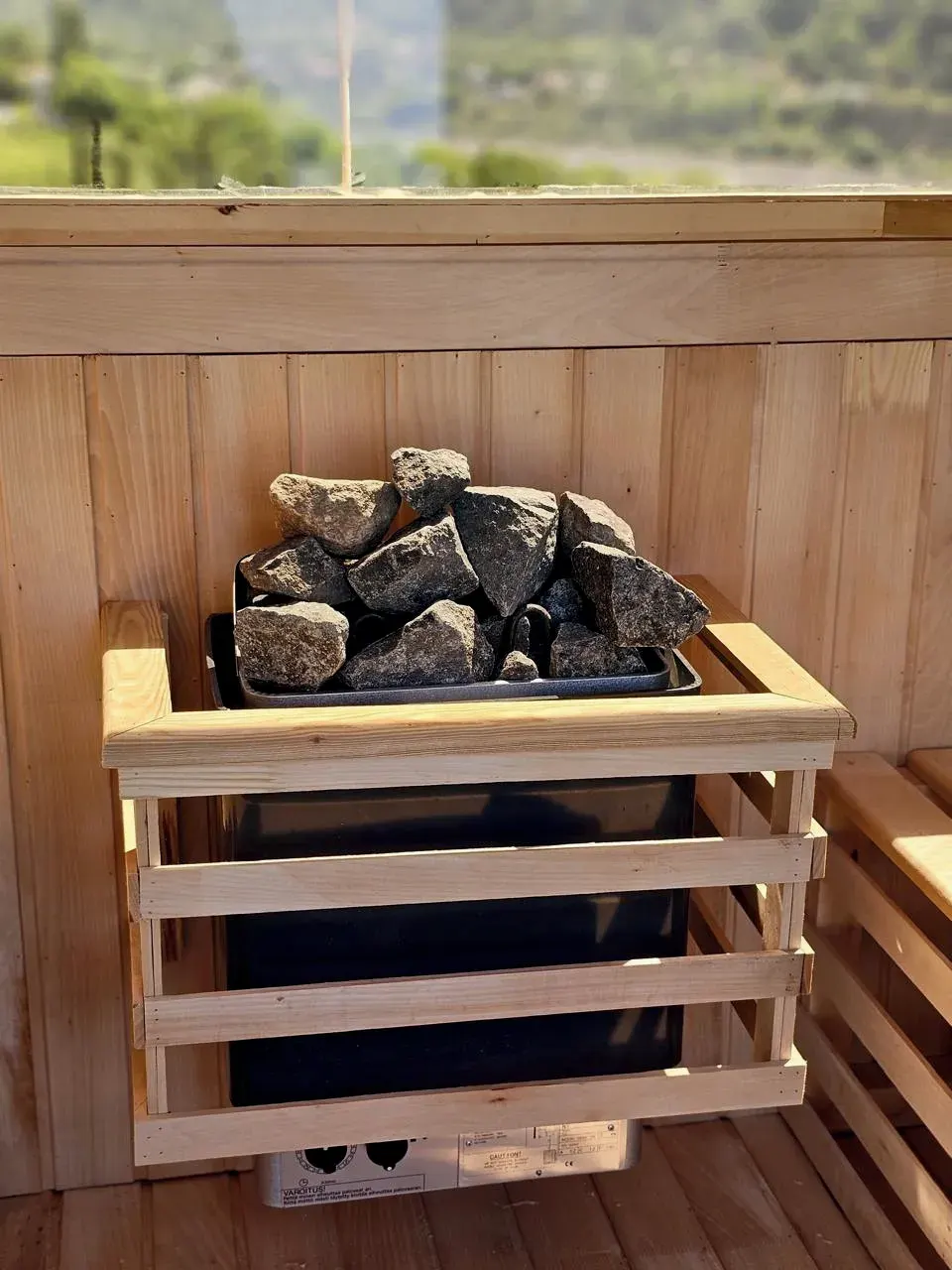
An electric heater doesn’t burn air, so ventilation is about comfort and moisture balance. The inlet sits near the heater so incoming air warms straight away. Heater output and vent positions follow the manufacturer’s manual — Harvia, SAWO, Teplodar, TMF and Fanlan all specify these requirements for their heaters.
Saunas with a wood-fired heater
A wood-burning stove takes combustion air from the room and sends it out through the chimney, so the stove is itself part of the ventilation system. That’s why a generous fresh-air inlet near the floor is essential. Without it, the stove is starved of air, smoke can blow back and the risk of carbon monoxide rises.
Safety: carbon monoxide, fire and electrics
Carbon monoxide (CO)
- Never fully close the chimney damper while embers are still glowing.
- The chimney must be sealed, clean and of the correct height.
- Fit a CO detector in the room next to the sauna.
- If you feel dizzy, get a headache or feel nauseous, go out into fresh air immediately.
Fire clearances
Minimum distances from the heater to walls, benches and ceiling are set out in the manufacturer’s manual and must be followed. You need non-combustible protection behind and under the stove, and heat-resistant insulation where the chimney passes through the roof.
Electrics
- A dedicated circuit sized for the heater, with proper protection.
- Heat-resistant cabling and light fittings designed for saunas.
- The control panel where the manufacturer specifies — usually outside the hot room.
- All connections made by a qualified electrician.
Common mistakes
- Placing inlet and outlet side by side — air leaves without crossing the room.
- An open outlet right under the ceiling — the hottest air escapes for nothing.
- No low-level inlet in a wood-fired sauna.
- Keeping the door shut after use — the sauna never dries.
- Leaving the electrical work “for later”.
How Barrel Sauna plans ventilation
Outdoor saunas
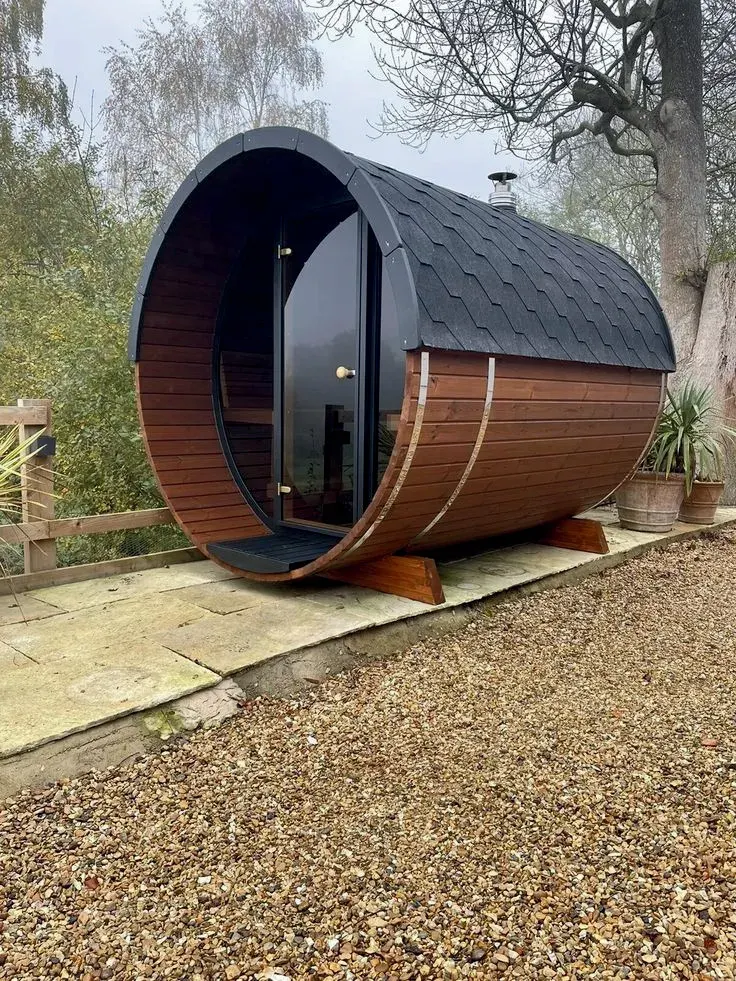
In our outdoor saunas, vents are built into the body according to the design. The walls contain mineral stone wool and a moisture-blocking membrane, so airflow is planned together with a structure that keeps moisture away from the frame. In wood-fired models the chimney exits safely through the roof.
Indoor saunas
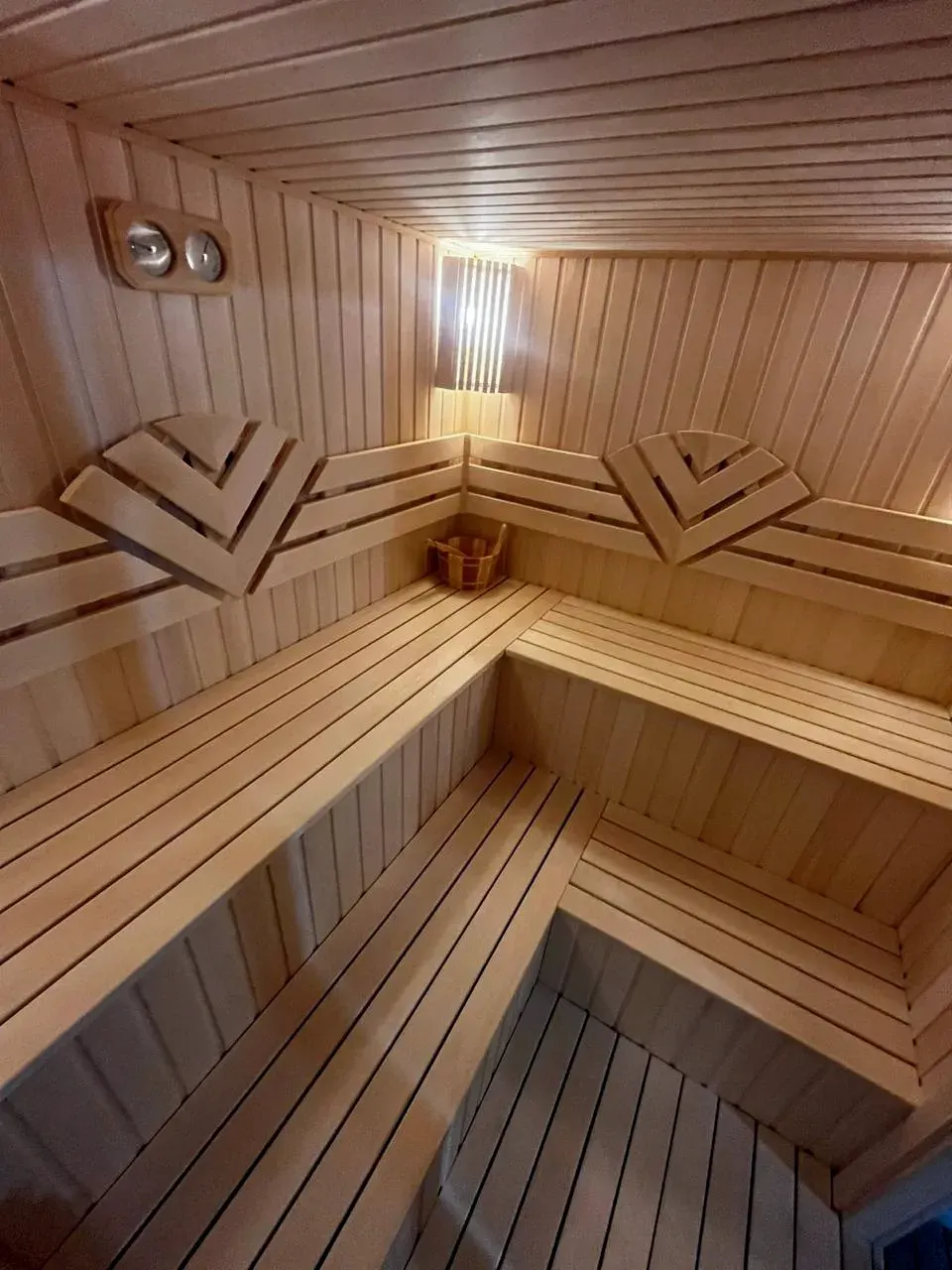
For indoor saunas built inside your home, ventilation has to work with the building’s existing system: humid air must go outside or into a ventilation duct, not into your living rooms. Multilayer insulation and a membrane between the house walls and the sauna frame protect the walls from steam. All of this is calculated during sauna construction, together with room size and heater choice.
Heater and ventilation are planned as one — browse models on our sauna heaters page.
FAQ
Does a sauna really need ventilation?
Yes. Without it the air turns stuffy, moisture lingers and the timber deteriorates. In a wood-fired sauna it’s also a safety requirement.
Where should the air inlet go?
Usually low down, near the heater. The exact spot depends on the heater type and the manufacturer’s manual.
Can I close the vents during a session?
You can keep the drying vent closed. The main inlet and outlet should stay open — especially with a wood-fired heater.
How do I prevent carbon monoxide in a wood-fired sauna?
Provide enough fresh-air inlet, keep the chimney sealed and clean, never close the damper while embers glow, and fit a CO detector nearby.
Can ventilation be added to a sauna in an existing house?
Yes, but it’s planned after inspecting the room and the home’s ventilation. In our indoor sauna projects we work this out before construction starts.
Plan a properly ventilated sauna
Let’s calculate ventilation, heater and electrics in advance so your sauna is both comfortable and safe. Message us on WhatsApp for a free consultation and design.